 Translate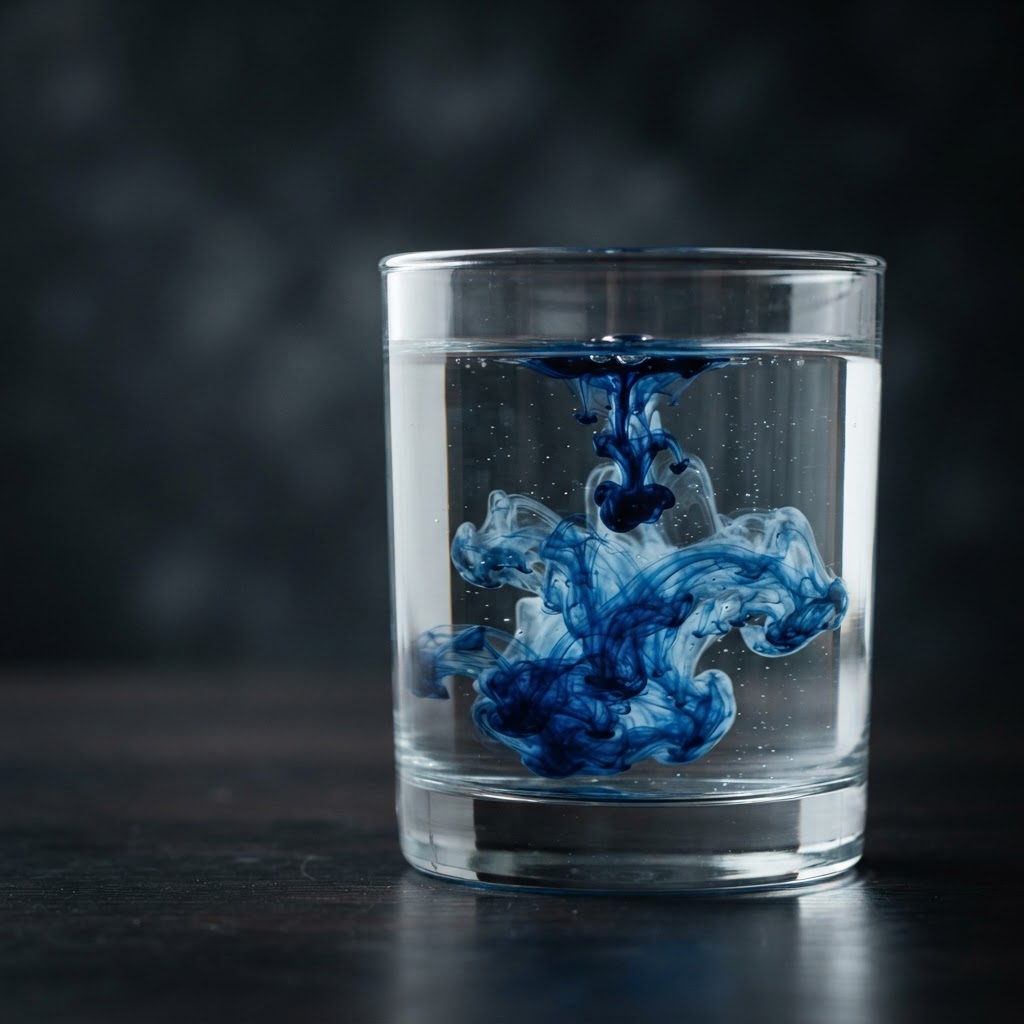
Entropy and the Arrow of Time
An exploration of the Second Law of Thermodynamics and how entropy dictates the irreversible flow of physical processes.
The Fundamental Directionality of Physics
In thermodynamics, we often focus on energy conservation, yet the Second Law introduces a more profound constraint: the irreversibility of time. While Newtonian mechanics is time-symmetric—meaning equations hold true whether time flows forward or backward—the Second Law asserts that in any isolated system, total entropy must increase over time. Entropy is a measure of microstate dispersion; as a system evolves, it naturally trends toward the most probable state, which is one of maximum disorder or high-entropy distribution.
Statistical Mechanics and Probability
From a professional engineering perspective, it is vital to distinguish between energy and exergy. Energy is conserved, but exergy (the available work) is degraded whenever entropy increases. Consider a hot cup of coffee in a room. The heat energy is not 'lost,' but it spreads into the cooler environment. As that heat energy becomes spatially dispersed, the potential to perform useful work vanishes. This is not because the energy lacks magnitude, but because it lacks the necessary thermal potential gradient to facilitate a heat engine cycle. The 'arrow of time' is essentially the observable result of the universe moving toward a state of equilibrium, where gradients are erased and work potential is minimized.
Practical Engineering Implications
For systems engineers, this creates a rigorous boundary. Perfect efficiency is fundamentally impossible because friction, heat leakage, and chemical dissipation inevitably dump entropy into the surroundings. When designing thermal management systems or power cycles, the goal is not to eliminate entropy—which would violate the laws of physics—but to minimize entropy generation (irreversibility) by operating as close to reversible limit cycles as technically and economically feasible. Every component in a system, from a turbine blade to a heat exchanger, should be evaluated based on its contribution to entropy production, as this is the metric that truly dictates thermodynamic performance limits.
By viewing design challenges through the lens of entropy, engineers can move beyond mere energy accounting and begin optimizing for the preservation of high-grade energy resources.
Try this at home
Observe entropy in action: Take a clear glass of cold water and add a single drop of food coloring. Do not stir. Watch as the color molecules naturally diffuse from a state of low-entropy (the concentrated drop) to a state of high-entropy (a uniform, light-colored solution) due to Brownian motion. Note that you cannot spontaneously reverse this process to isolate the drop again without adding external energy to the system.
