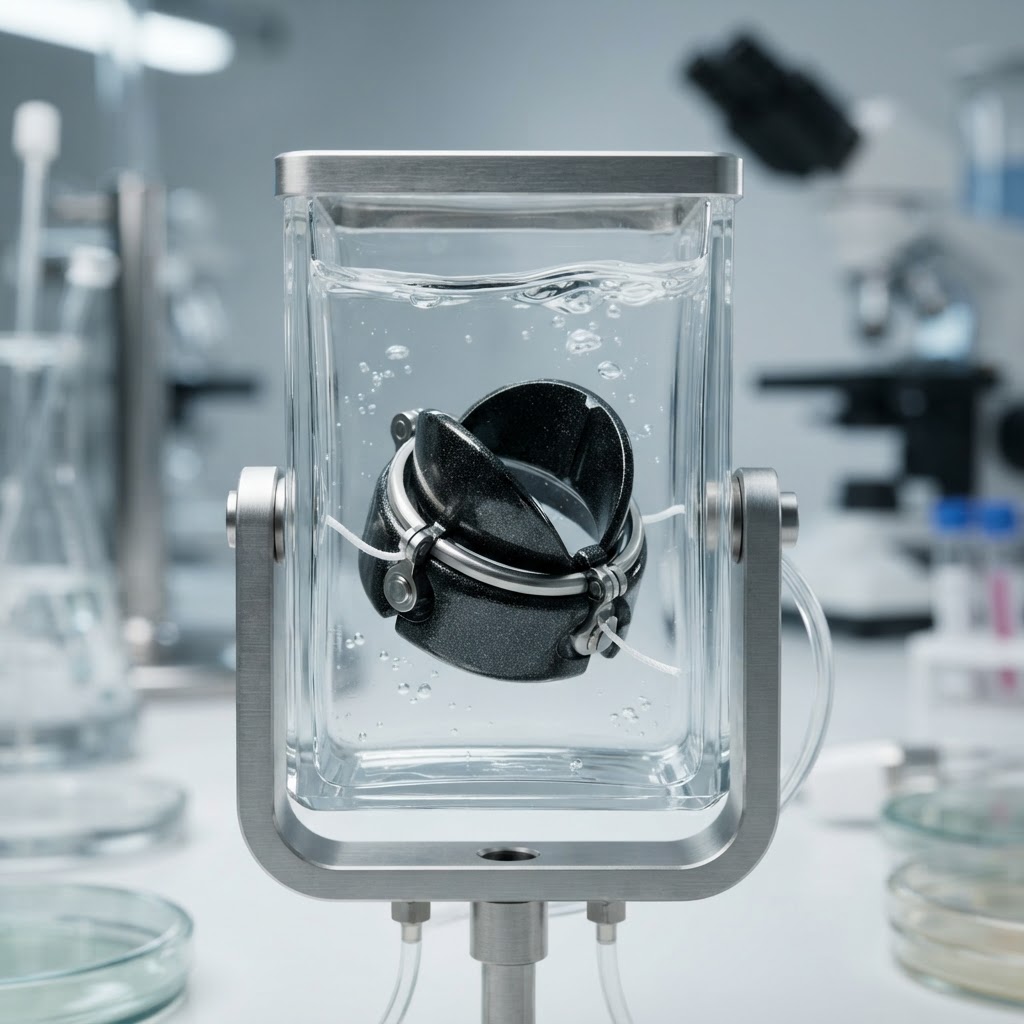
The Mechanics of Artificial Valves
Explore how biomedical engineers replicate the complex fluid dynamics of human heart valves.
The Heart's One-Way Street
The human heart is a sophisticated pump that beats over 100,000 times a day, circulating blood through a complex network of vessels. At the center of this efficiency are the heart valves, which function as biological check valves. Their primary role is to ensure that blood flows in only one direction, preventing backflow (regurgitation) during the pumping cycle. When these valves become diseased—either through stenosis (narrowing) or prolapse (leaking)—biomedical engineers must design artificial replacements that can withstand the intense, cyclic mechanical stress of a lifetime of beating.
Material Science and Hemodynamics
Designing an artificial heart valve is a masterclass in compromise. Engineers must balance three competing factors: structural durability, biocompatibility, and hemodynamics.
-
Durability: The valve must open and close roughly 40 million times per year without material fatigue. Engineers often use pyrolytic carbon, a material famously durable and resistant to blood clotting, to construct the valve leaflets.
-
Biocompatibility: The body is a hostile environment. Any material inserted into the bloodstream is treated as a foreign object, which can trigger the immune system or encourage dangerous blood clots (thrombi). Engineers coat surfaces with specialized polymers or treat them to mimic the smooth, non-stick lining of natural blood vessels (the endothelium).
-
Hemodynamics: The geometry of the valve must minimize turbulence. If blood flow becomes 'chaotic' or turbulent as it passes through the device, the mechanical stress can rupture red blood cells (hemolysis) or create areas where blood pools and clots.
The Future of Valve Design
Today, modern biomedical engineering is shifting away from mechanical metal valves toward bioprosthetic valves. These are often crafted from chemically treated animal tissue, such as pig or cow pericardium. These valves mimic the 'soft' opening and closing of human tissue, requiring less aggressive anti-coagulation medication for the patient. However, they are less durable than mechanical counterparts, leading engineers to focus on next-generation tissue engineering—growing a patient's own cells on a scaffold to create a truly living, self-repairing replacement.
Try this at home
Model a One-Way Valve
- Take a clean plastic water bottle and cut off the bottom.
- Create a 'flap' over the mouth of the bottle using a piece of thin plastic wrap and a rubber band, leaving one side of the wrap loose.
- Turn the bottle upside down and pour water through the top. The loose wrap should push aside (the 'open' valve).
- Now, attempt to blow air into the bottle from the bottom; the wrap should seal against the opening (the 'closed' valve). This demonstrates the basic fluid dynamics of check valves.