 Translate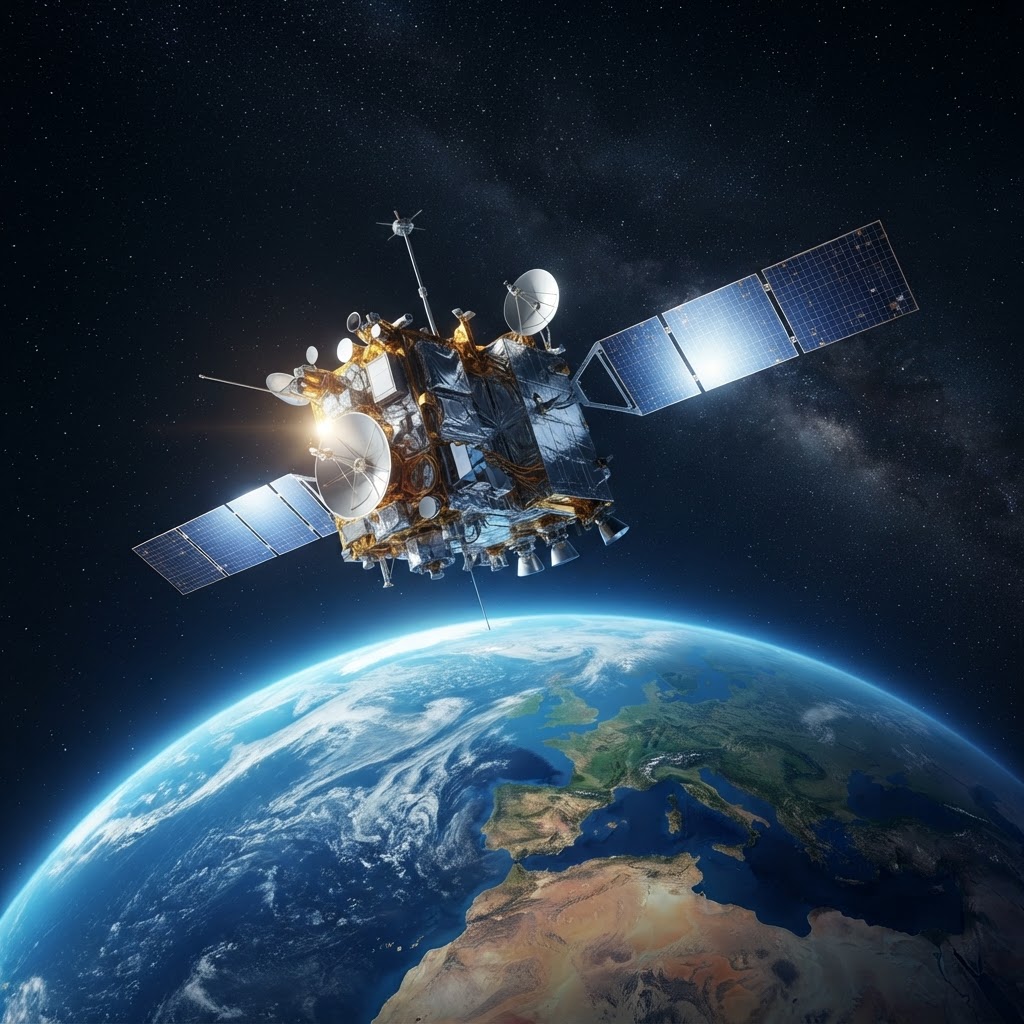
Orbital Mechanics: How Satellites Stay Aloft
Explore the delicate balance between gravity and velocity that keeps satellites in orbit around our planet.
The Balancing Act of Orbits
At first glance, it seems counterintuitive that a satellite like the International Space Station doesn't simply crash into Earth. The secret lies not in hovering, but in falling forever. An orbit is essentially a state of perpetual freefall where an object moves forward so fast that as it falls toward the Earth due to gravity, the surface of the planet curves away beneath it at the same rate. This is often referred to as the 'Newton's Cannonball' thought experiment.
Achieving Orbital Velocity
To maintain a stable orbit, a satellite must reach a specific speed known as orbital velocity. If a spacecraft travels too slowly, gravity wins, and the craft descends into the atmosphere to burn up. If it travels too fast, it reaches escape velocity and leaves Earth's orbit entirely to travel into deep space. The 'Goldilocks' speed required to stay in Low Earth Orbit (LEO) is approximately 17,500 miles per hour (28,000 kilometers per hour).
Types of Orbits
Engineers classify orbits based on their altitude and path. Low Earth Orbit (LEO) is the region closest to our planet, typically used for the ISS and many Earth-imaging satellites because it requires the least amount of energy to reach. Further out, we find Geostationary Earth Orbit (GEO). In this orbit, a satellite moves at exactly the same speed as the Earth's rotation. This makes the satellite appear to hang motionless over a single spot on the equator, which is essential for consistent satellite television and weather monitoring. By calculating the mass of the planet and the distance of the orbit, engineers can precisely predict where a satellite will be at any given moment. This field of study, known as astrodynamics, is what allows us to navigate our world using GPS and study the changing climate from space.
Try this at home
Orbiting a Coin
- Take a clean, empty plastic bucket or a large bowl with curved sides. 2. Place a small coin near the rim and give it a quick flick so it rolls along the inside edge. 3. Watch as the coin circles the bowl. Notice that it stays on the wall as long as its speed is high. As it loses momentum, it spirals toward the bottom. This demonstrates how velocity keeps objects from falling into the center (gravity).
