Composite Materials: Strength in Synergy
Discover how combining two materials creates properties neither could achieve alone.
Defining Composites
A composite is a material made from two or more constituent materials with significantly different physical or chemical properties. When combined, they produce a material with characteristics different from the individual components. The most common structure involves a 'reinforcement'—the fibers or particles providing strength—and a 'matrix'—the binder that holds the reinforcement in place and transfers loads.
The Principle of Synergy
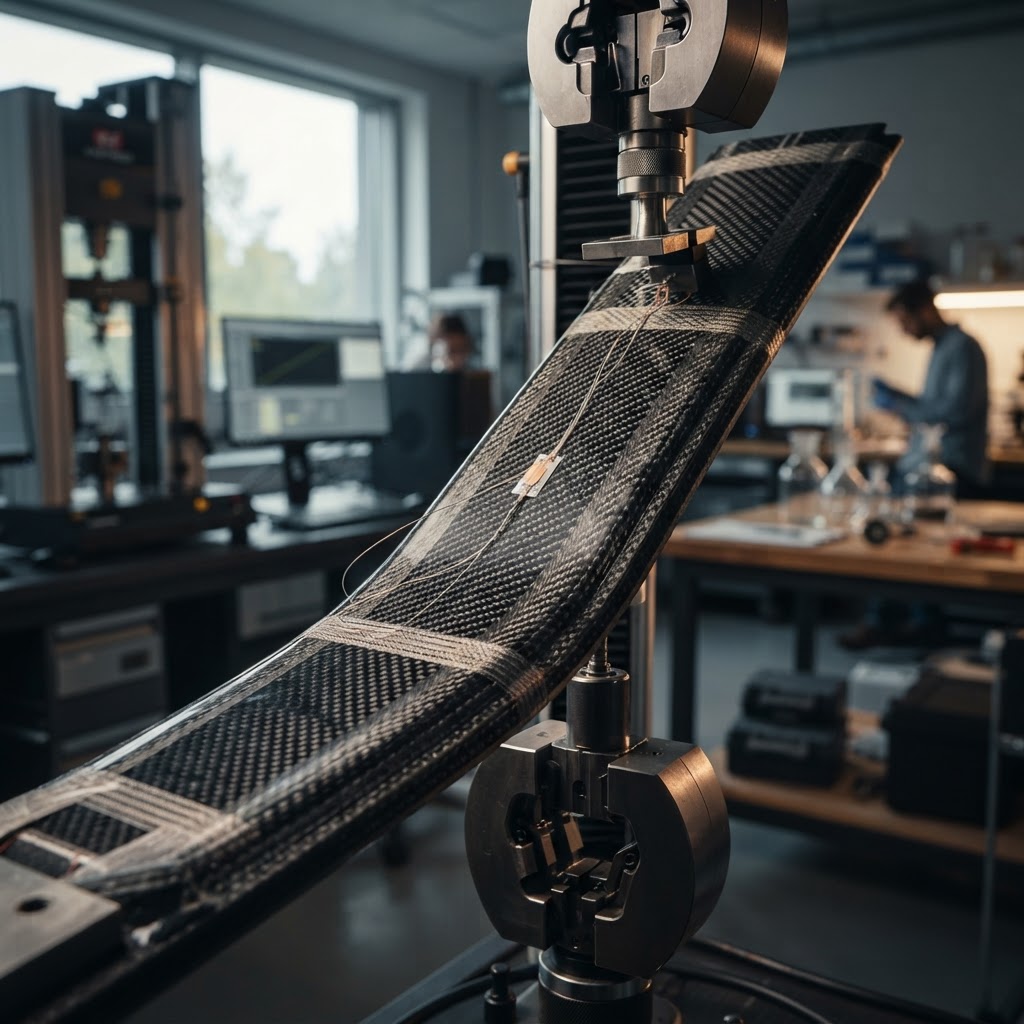
Think of concrete. By itself, cement is strong in compression but brittle and weak in tension. By adding steel rebar (the reinforcement), the composite gains the ability to withstand tension, making it ideal for support beams. This principle of synergy allows engineers to create materials that are lightweight, incredibly strong, and tailored for specific environments. Carbon fiber reinforced polymers are perhaps the most famous example, offering a strength-to-weight ratio that rivals titanium.
Designing for Performance
One of the greatest advantages of composites is 'anisotropy.' Unlike metals, which have the same strength in all directions, composites can be designed to be strong only where it is needed. By orienting fibers in specific directions, an engineer can reinforce a wing spar to handle the upward lift of an aircraft while keeping the rest of the structure lightweight and flexible. As manufacturing techniques become more accessible, composites are revolutionizing everything from sports equipment to renewable energy turbine blades.
Try this at home
Create a simple composite by mixing flour and water into a thick paste (the matrix), then stir in strips of wet paper towels or cotton string (the reinforcement). Let the mixture dry completely in a small tray. Once hardened, compare your 'paper-concrete' to a slab of dried flour-water paste without fibers. Try to bend both pieces. You will find that the composite with the fibers is much harder to snap. This experiment mimics the structural design of fiber-reinforced plastics, showing how the fibers help distribute stress and stop cracks from propagating through the brittle matrix.