 Translate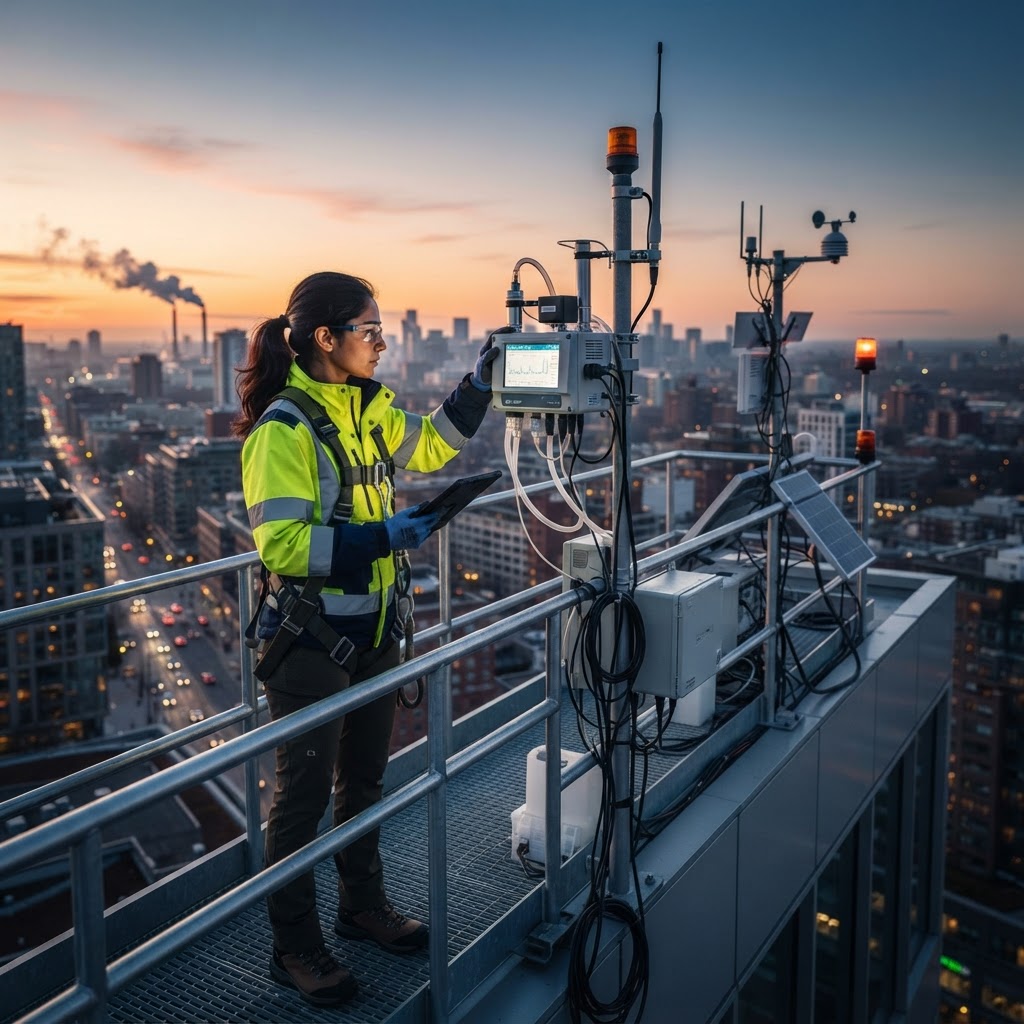
Air Quality Monitoring
Understanding how we measure particulate matter to keep our air clean.
What is Particulate Matter?
Air quality is a major environmental concern, particularly in urban areas. Particulate matter, or PM, refers to a mixture of solid particles and liquid droplets in the air. PM2.5, which consists of particles smaller than 2.5 micrometers, is especially dangerous because these tiny bits can travel deep into the lungs and even enter the bloodstream. Engineers design sensors to monitor these levels and provide data for public health.
How Sensors Work
Modern air quality sensors often use laser scattering technology. A laser beam is shone through an air stream, and when particles pass through the beam, they scatter the light. A photo-detector measures the scattered light, and a microprocessor calculates the number and size of the particles based on the light signature. This real-time data allows cities to issue health warnings or adjust traffic patterns to reduce localized pollution.
Solutions for Cleaner Air
Beyond monitoring, engineering solutions include building green walls that act as natural filters, implementing better public transportation to reduce vehicle emissions, and setting stricter standards for industrial exhaust systems. By combining accurate sensor data with targeted infrastructure improvements, we can create healthier environments for everyone to live and work in.
Try this at home
Make a simple air quality dust collector. Take a piece of white cardstock and draw a circle in the center. Apply a thin, even layer of petroleum jelly inside the circle. Place the card outside in a relatively dust-prone area—like near a driveway or a sidewalk—for 48 hours. After two days, examine the card with a magnifying glass. The particles stuck in the jelly represent the dust and pollutants in your local air. Use the magnifying glass to categorize what you see, such as soot, pollen, or sand, to learn more about the particulate matter in your surroundings.
