Resistors: The Traffic Controllers of Circuits
Discover how resistors manage electron flow to protect sensitive components.
The Role of Resistance
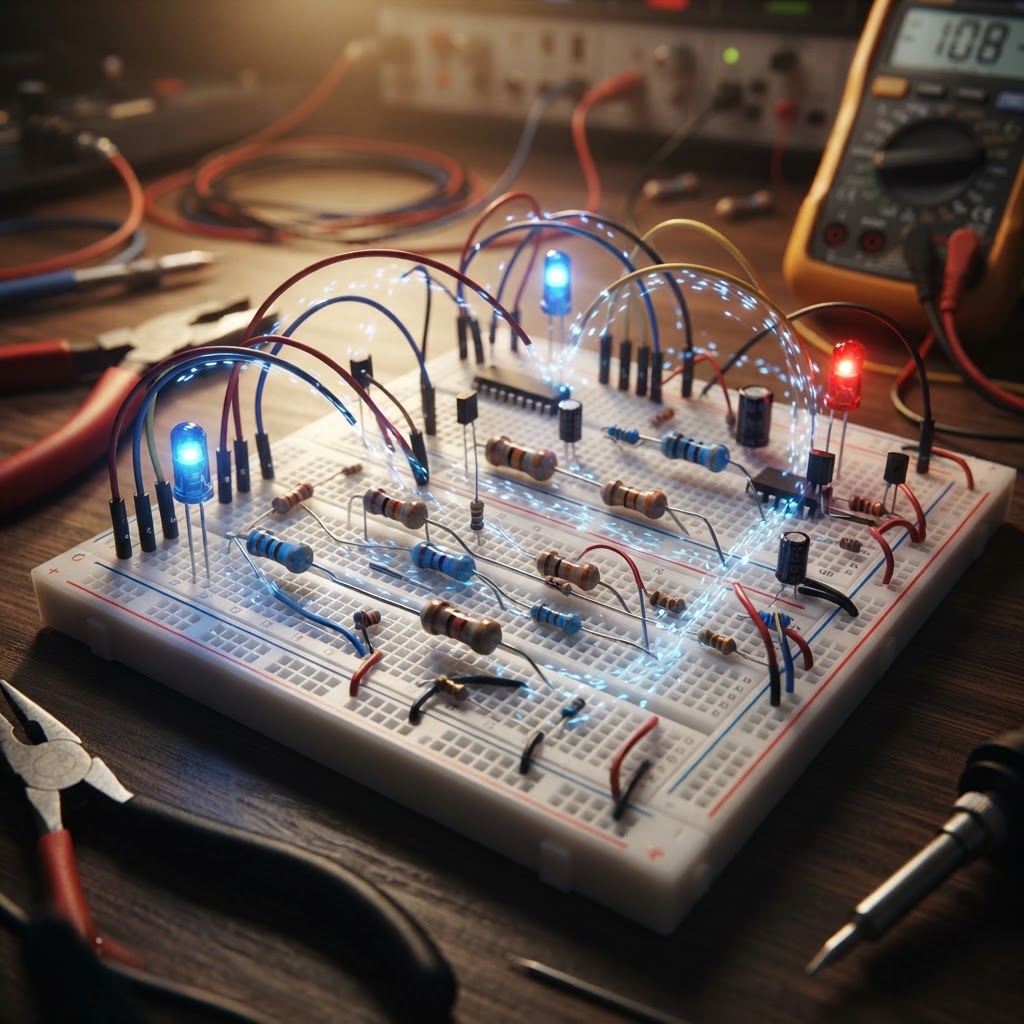
If voltage is the pressure and current is the flow, resistance is the bottleneck. Resistors are components specifically designed to limit or regulate the flow of electricity in a circuit. Without them, sensitive components like LEDs would draw too much current and burn out almost instantly. They transform electrical energy into heat, acting as a gatekeeper for the electrons.
Understanding Color Codes
How do you know what a resistor does? Most small resistors have color-coded bands. Each color represents a number, and by reading these bands in a specific order, you can determine the resistance value measured in Ohms. It is a universal language used by engineers globally to ensure circuits are built with the correct specifications.
Real-World Usage
Resistors are everywhere. They are used in volume controls on speakers to change signal levels, in sensors to detect light or temperature, and in digital electronics to pull voltage levels to a stable state. By changing the amount of resistance in a circuit, you can fine-tune exactly how much energy a device receives, giving you complete control over your electrical designs.
Try this at home
Search for an old broken electronic device (with adult supervision, ensuring it is unplugged). Open the casing and look for the circuit board. You will likely see small, cylindrical components with colored stripes—those are resistors. Use a magnifying glass to identify the different color patterns. Try sketching the patterns you see. Even if you don't know the exact value, recognizing these shapes helps you understand that every device relies on these tiny traffic controllers to balance its energy consumption.