The Fundamentals of Actuation
Discover how electricity is transformed into physical motion.
Translating Energy to Motion
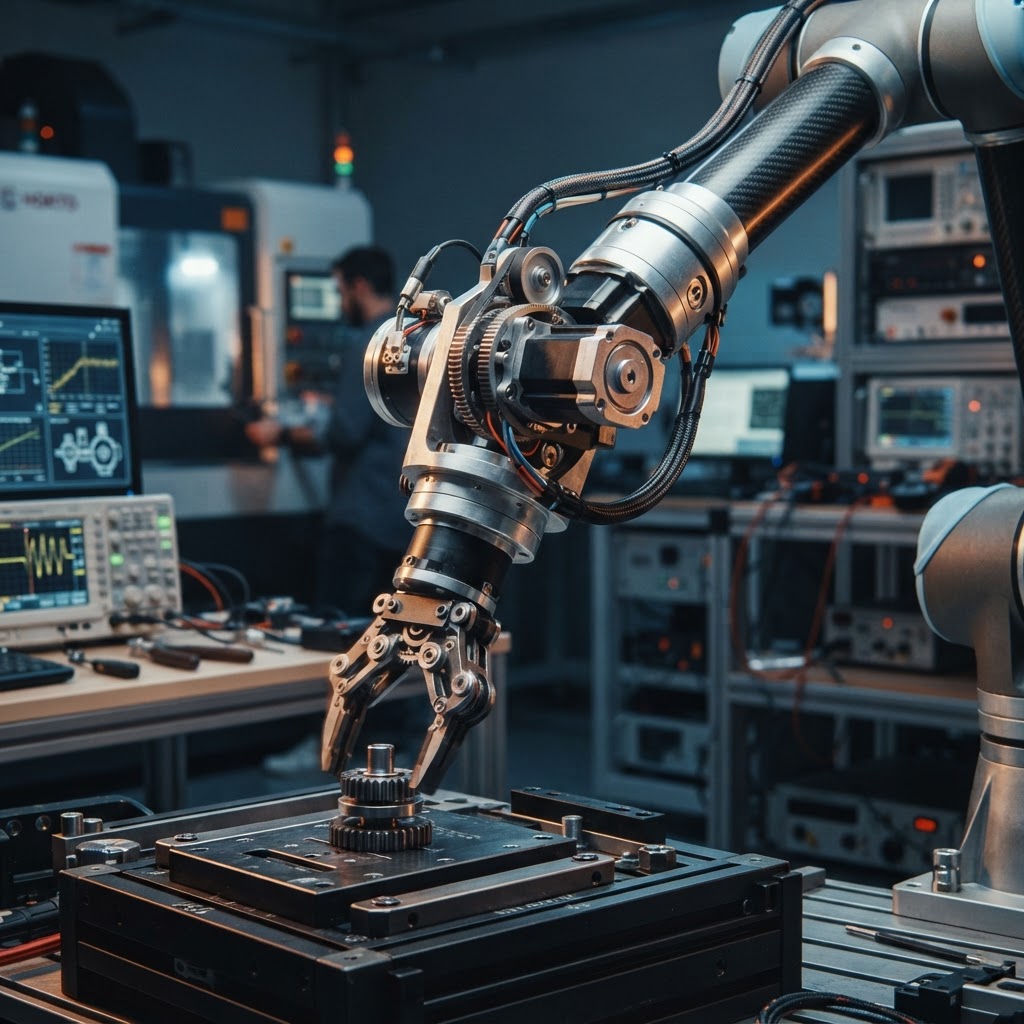
Actuators are the muscles of a mechatronic system. They convert electrical energy into mechanical movement. While motors are the most common type, actuators can also include solenoids, hydraulic pistons, or pneumatic valves. Choosing the right actuator is essential for ensuring your machine has the strength and precision to perform its intended task.
Understanding Torque and Speed
When selecting a motor, you must consider the trade-off between torque and speed. Torque is the rotational force, while speed is the rate of rotation. A motor designed for high speed often lacks the necessary strength to lift heavy loads, while high-torque motors are usually slower. Engineers use gearboxes to manipulate these properties, trading speed for increased mechanical advantage.
Control Systems
Simple motors just spin when power is applied, but mechatronics requires control. We use drivers, such as H-bridges, to allow motors to rotate in both directions or to stop precisely at a specific location. By combining a motor with a feedback sensor, we create a closed-loop system that ensures the machine stops exactly where we want it to, every single time.
Try this at home
Build a simple lever arm using a ruler and a rubber band. Attach a heavy object like a marker to the end of the ruler. Use your finger as the actuator to push the ruler up. Notice how much force you need to lift the weight. Now, slide your finger closer to the pivot point (the fulcrum) of the ruler. You will notice that it requires much more force to lift the weight, demonstrating the relationship between leverage and torque. This is the mechanical principle behind how motors move heavy robotic arms.