Your progress0%
Read
Practice
Knowledge check
Wrap-up
Geotechnicalbeginner
1 min read
Subsurface Exploration: Uncovering Ground Secrets
Exploring the methods engineers use to see what is hidden underground.
Share:
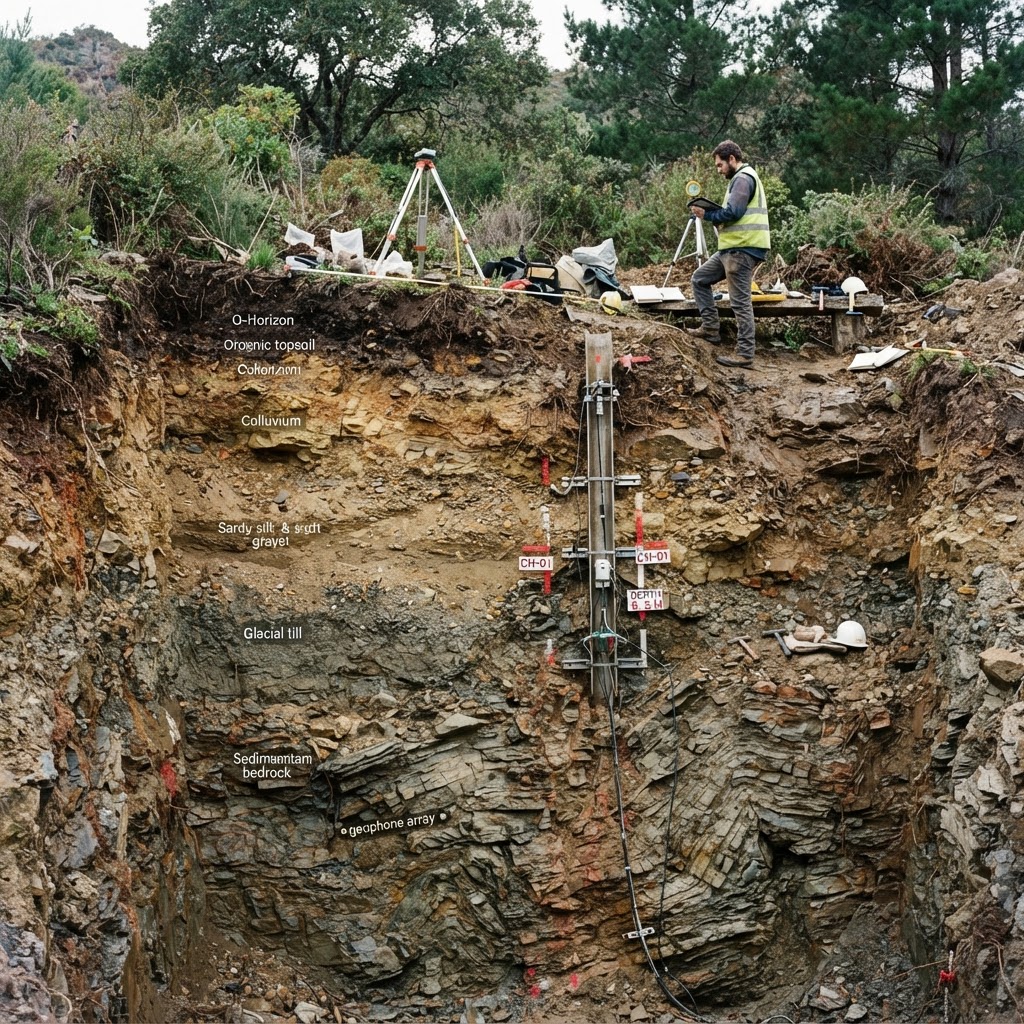
Why Explore? Before we can design any foundation, we must know what lies beneath the surface. Geotechnical engineers use site investigations to create a 'geotechnical model' of the area. We cannot build safely without knowing the sequence of soil layers, the depth of the water table, and the presence of bedrock. ## Common Investigation Methods The most standard method is a borehole, where a drill rig extracts 'core samples' of the earth. These samples are taken to a lab and tested for density and strength. Another popular tool is the Cone Penetration Test (CPT), which pushes a sensor-tipped rod into the ground to measure resistance in real-time. By combining these methods, engineers can produce a detailed map of the subsurface. This data is the foundation of all engineering decisions; it tells us if we need deep piles to reach hard rock or if the soil is strong enough to support a standard mat foundation. The more we know about the unseen layers, the more robust and cost-effective our final designs become.
Try this at home
Take a clear straw and push it vertically into a layered cake or a container filled with distinct layers of flour, sugar, and cocoa powder. Carefully pull the straw out and examine the contents. The layers inside the straw represent a soil core sample. By looking at the straw, you can identify exactly which materials are at which depth. This is a simple, edible way to visualize how geotechnical engineers extract vertical samples from the ground to understand the site's subsurface profile before construction begins.