Your progress0%
Read
Practice
Knowledge check
Wrap-up
Geotechnicalbeginner
1 min read
Soil Classification: The Engineering Alphabet
Learn how to categorize soils based on particle size and texture.
Share:
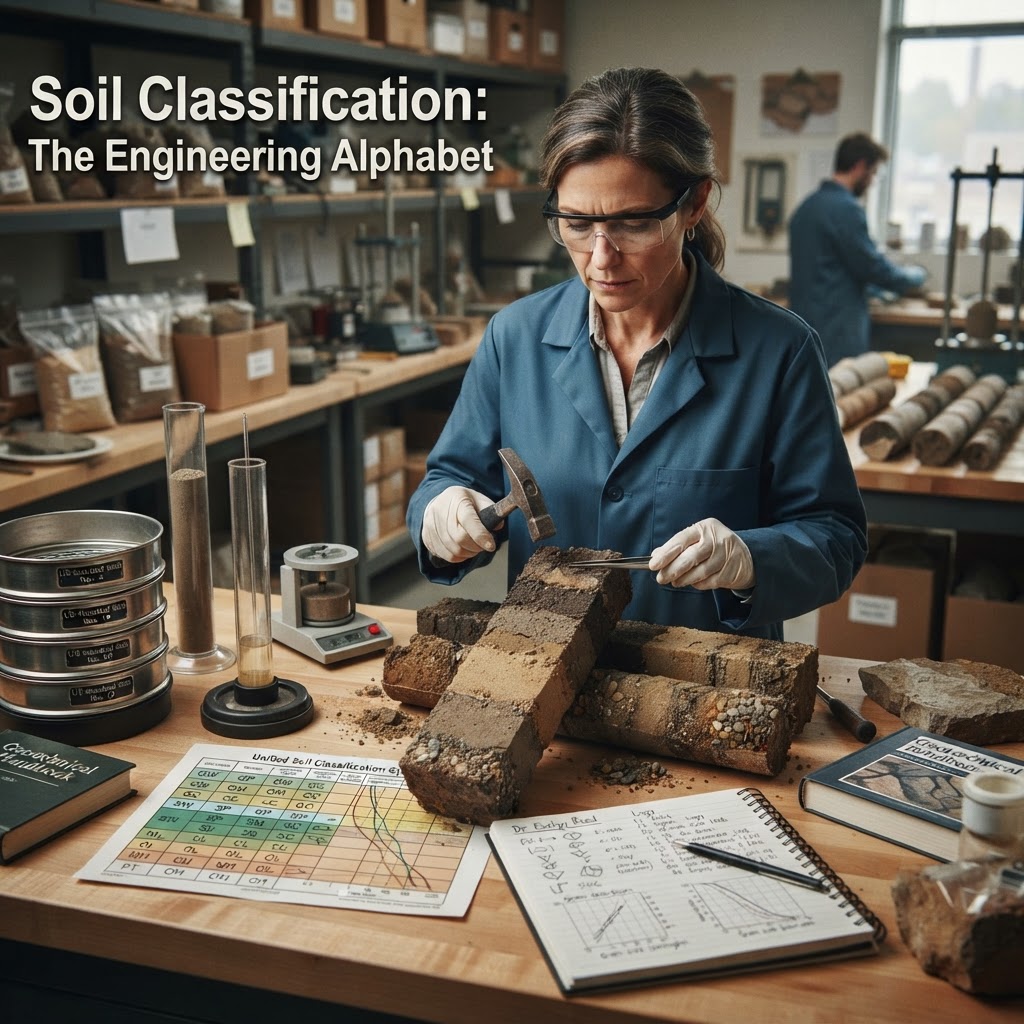
What is Soil Composition? In geotechnical engineering, soil is not just dirt; it is a complex material made of minerals, organic matter, air, and water. Engineers categorize soil primarily by grain size. We differentiate between coarse-grained soils like gravel and sand, which drain water easily, and fine-grained soils like silt and clay, which act more like cohesive binders. ## Why Size Matters The physical behavior of a soil type dictates how it supports a structure. Coarse-grained soils typically have high friction and allow water to pass through quickly, making them ideal for foundations that need to remain stable during rain. Conversely, fine-grained soils such as clay can shrink or swell drastically depending on their water content. Understanding these characteristics allows engineers to choose the right foundation depth or soil improvement technique for a project site. By classifying the soil early, we can predict potential issues like excessive movement before any construction begins.
Try this at home
Gather three clear plastic cups and fill them with garden soil, beach sand, and aquarium gravel. Fill each cup with an equal amount of water and stir them gently. Observe how quickly the particles settle over the next hour. The sand and gravel will fall to the bottom rapidly, leaving the water relatively clear, while the finer silt or clay particles in the garden soil will keep the water murky for a long time. This experiment demonstrates the concept of settling velocity and particle size distribution, showing how different soil types interact with water and gravity in the real world.