 Translate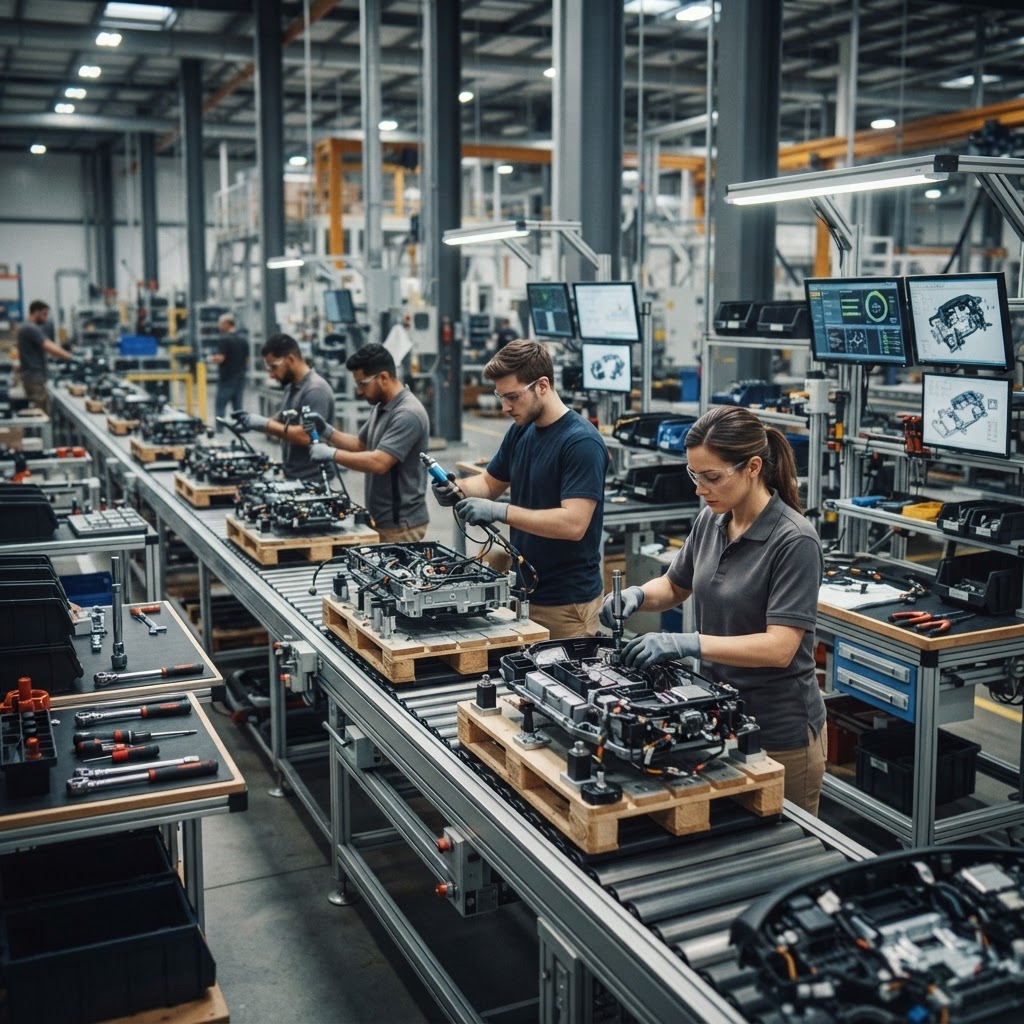
An Introduction to Assembly Line Balancing
Discover how to organize production tasks to maximize efficiency and flow.
Defining the Flow
An assembly line is more than just a conveyor belt; it is a carefully sequenced series of tasks. The goal of assembly line balancing is to assign tasks to workstations so that each station takes roughly the same amount of time to complete. If one station takes 30 seconds and the next takes 60 seconds, a bottleneck forms, and efficiency plummets. Engineers use time studies and workflow analysis to ensure that every worker or robot is utilized effectively, minimizing idle time and maximizing output.
Optimizing for Speed
To balance a line, engineers first break down the assembly process into 'work elements.' These elements must be completed in a specific order due to technical constraints—for example, you cannot put a lid on a box before you put items inside. Once the constraints are mapped, engineers group these tasks to minimize the cycle time. By keeping the flow constant and rhythmic, manufacturers can ensure that the line operates at the fastest possible pace without overwhelming any individual station or creating unmanageable piles of in-process inventory.
Try this at home
Organize a 'sandwich assembly line' with two or three friends. Use assembly stations: station one gets the bread, station two adds the fillings, and station three adds the top bread and plates it. Time how long it takes to make five sandwiches. Now, look for the bottleneck—which person is the slowest? Rearrange the tasks so each person has a balanced amount of work. Time the process again and see how much faster your team can complete the same task when the workload is balanced.
