 Translate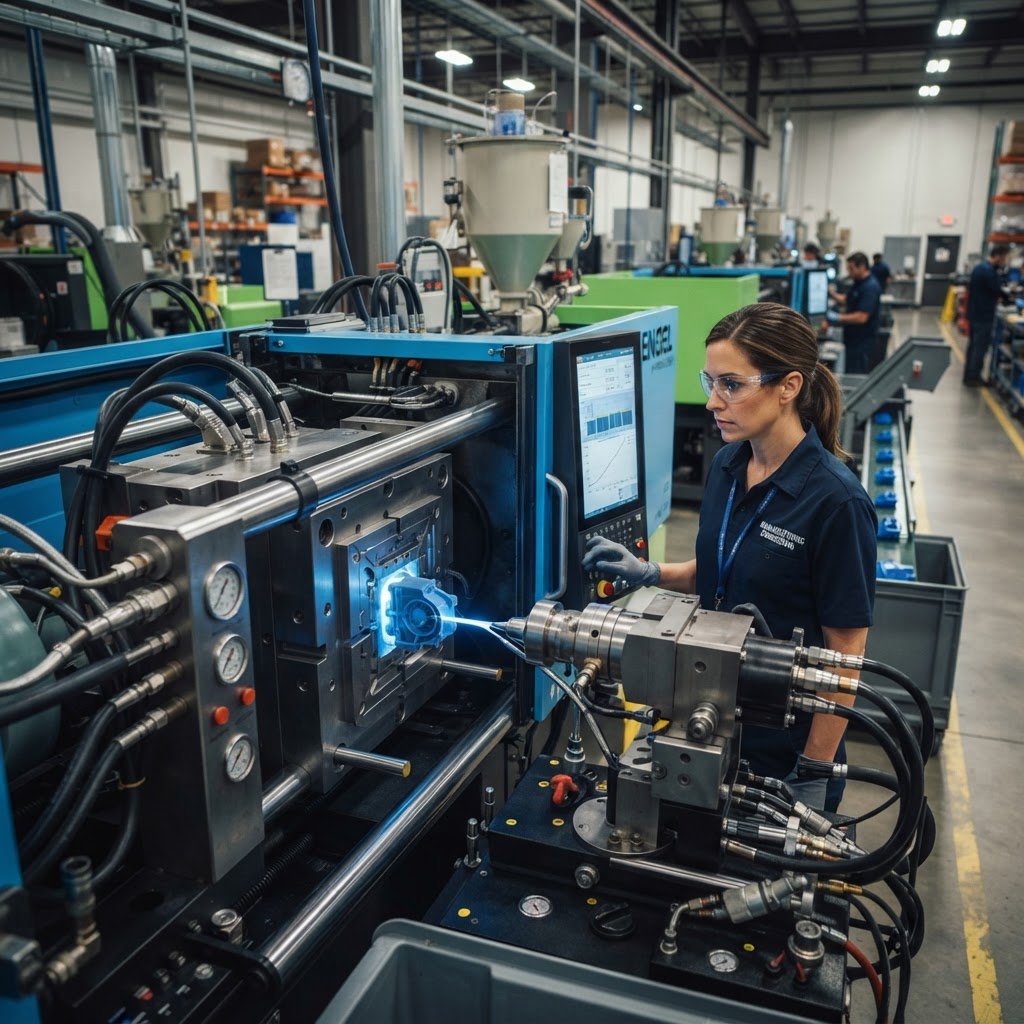
The Fundamentals of Injection Molding
Learn how liquid plastic is transformed into precise everyday plastic components.
How It Works
Injection molding is one of the most common manufacturing processes for creating plastic parts. The process starts by melting plastic pellets in a heated barrel. Once the material reaches a molten state, it is injected under high pressure into a steel or aluminum mold cavity. As the plastic cools inside the mold, it takes the precise shape of the cavity. Once solid, the mold opens, and the final part is ejected. This method is incredibly fast and efficient for producing thousands of identical items with high precision.
Precision and Efficiency
What makes injection molding revolutionary is its ability to produce complex geometries that would be impossible to machine from a solid block. Features like snap-fit clips, thin walls, and internal threads can be integrated directly into the mold design. Because the process is highly automated, the cost per unit drops significantly as production volume increases. Engineers must carefully design the draft angles—slight tapers on the walls of the part—to ensure that the finished piece can be easily removed from the mold without damage.
Try this at home
Find a few plastic items around your home with complex shapes, such as a laundry detergent bottle or a toy action figure. Look closely at the surface to find tiny circular indentations; these are 'ejector pin marks' where the mold pushed the finished part out. Also, check for a 'parting line,' a thin raised ridge where the two halves of the mold met during the injection process. By identifying these features, you are seeing the physical evidence of the manufacturing process in action.
