 Translate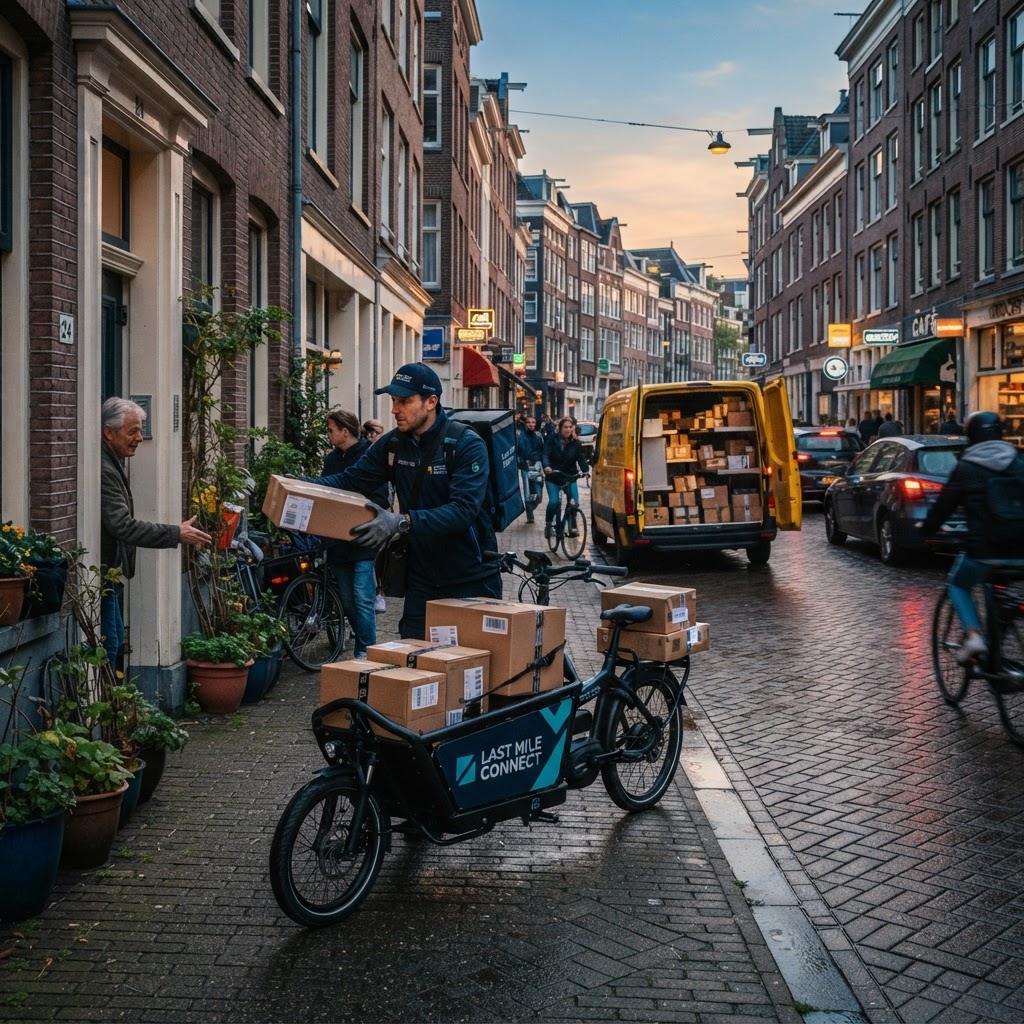
The Last Mile Delivery Challenge
Explore the final stage of shipping that connects warehouses to customers.
Defining the Last Mile
The 'last mile' refers to the final step of the logistics process: moving a package from a transportation hub to its ultimate destination. While it is often the shortest leg of a journey, it is paradoxically the most expensive and complex. Engineers must navigate urban density, unpredictable traffic, and the need for precision timing to ensure a successful delivery.
Optimizing Routes
The challenge of the last mile is essentially a version of the Traveling Salesperson Problem. An engineer must determine the shortest path to visit multiple locations while accounting for vehicle capacity and driver rest periods. By using algorithmic routing, logistics companies can reduce fuel consumption and decrease delivery times, which are critical for customer satisfaction in the age of e-commerce.
Future of Delivery
Technology is rapidly changing the last mile. We are seeing the integration of autonomous delivery robots, locker pick-up systems, and predictive analytics that anticipate package arrival windows. As an engineer, your job is to assess the trade-offs between speed, cost, and environmental impact. For instance, while a drone delivery is fast, it may be limited by weight and battery life, making electric ground vehicles more viable for heavier parcels.
Try this at home
Pick five locations in your home, such as the kitchen, bedroom, and bathroom. Use a timer to record the time it takes to walk a 'delivery' (a small object) to each location one by one. Now, map a single loop path that visits all five points and returns to the start. Compare the total time taken for the individual trips versus the optimized loop. Note how grouping tasks changes the total time and energy expended, demonstrating the efficiency gained through route optimization.
