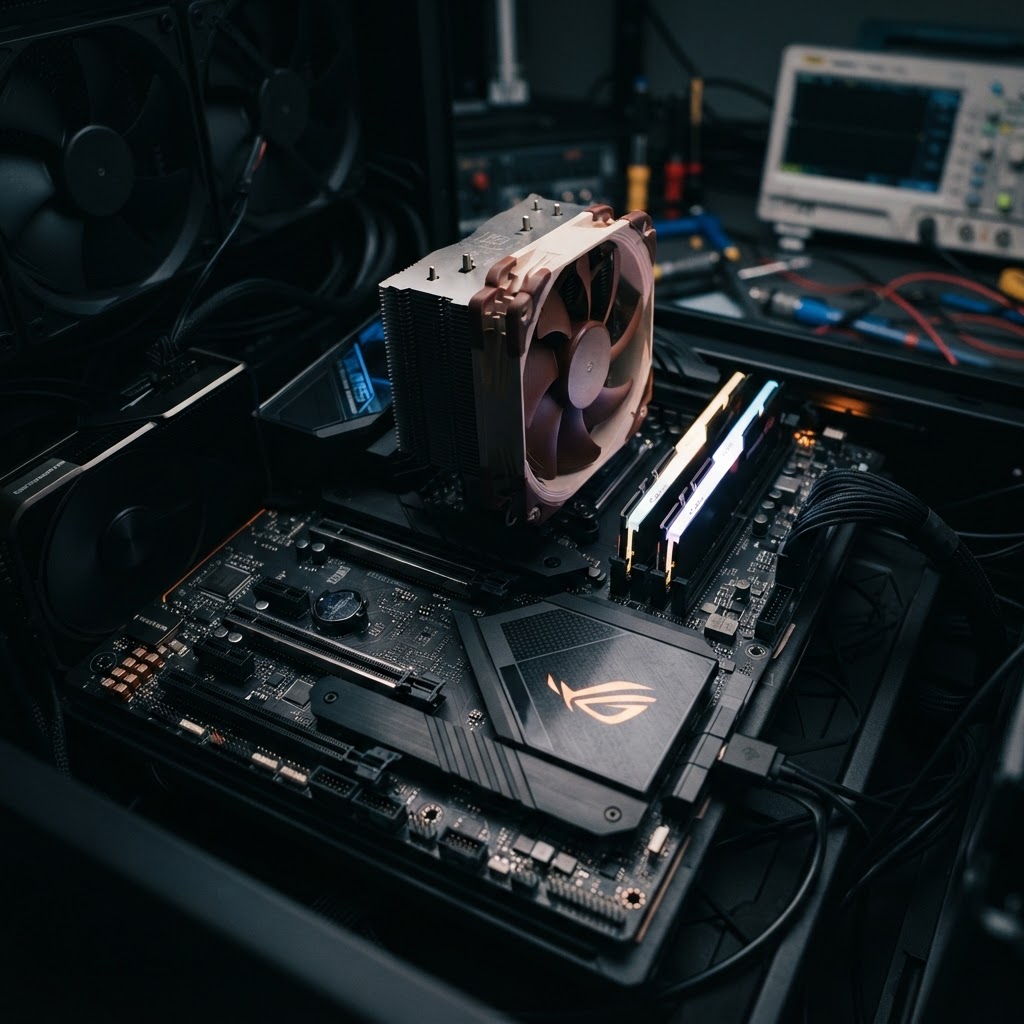
The Motherboard: The Computer's Nervous System
Learn how the motherboard connects every vital component of your system.
The Central Hub
Think of the motherboard as the skeleton and nervous system of a computer. It is a large printed circuit board that holds the CPU, memory, and connectors for input/output devices. Without the motherboard, the other components would have no way to communicate or receive power.
Routing Data via the Chipset
The motherboard does more than just act as a physical anchor. It hosts the chipset, which acts as a traffic controller. The chipset manages the flow of data between the processor, the storage drives, and external devices like your mouse or keyboard. High-speed lanes called 'buses' connect these parts, allowing information to zip across the board at gigahertz speeds.
Form Factors and Expansion
Motherboards come in different sizes, called 'form factors'. The most common is ATX. These boards are designed with standardized holes and slots, allowing you to plug in expansion cards—like a high-end graphics card for gaming or a sound card for audio production. Because of these standards, building or upgrading a computer is essentially like playing with high-tech building blocks, as long as you ensure the parts are compatible with your specific motherboard socket.
Try this at home
You can understand the concept of a motherboard by looking at a power strip or a surge protector. A power strip has many outlets (slots) that connect various devices (components) to a single power source (the power supply). If you have multiple devices plugged in, the power strip acts as the hub. Take a look at a power strip and label which outlet powers your monitor, your computer, and your lamp. Imagine if those outlets were also exchanging data between the lamp and the monitor; that represents the advanced data-routing capabilities of a real motherboard. It is the central piece that makes the system a unified machine.