 Translate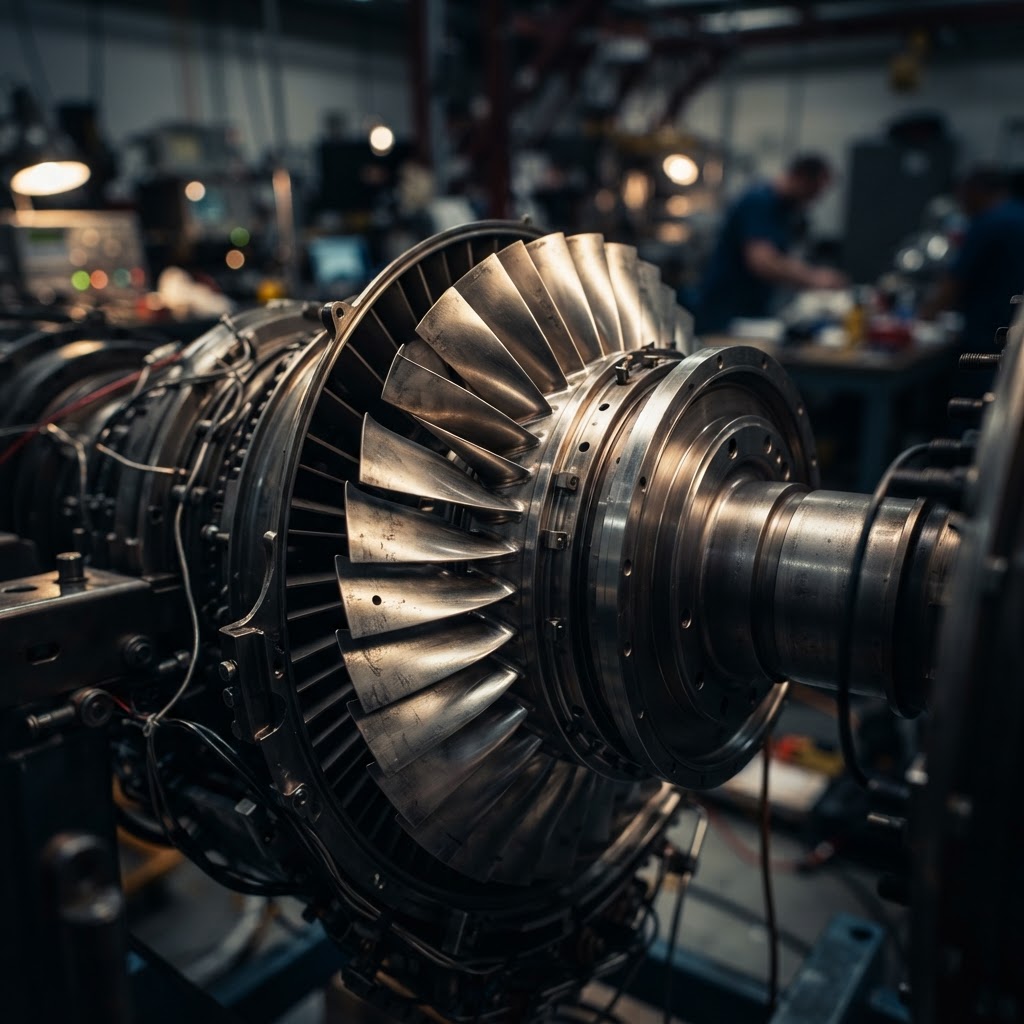
Inside the Jet Engine: The Brayton Cycle
Learn how modern jet engines suck, squeeze, bang, and blow their way to power.
The Four Stages of Thrust
Most modern jet engines are gas turbines that follow a process known as the Brayton Cycle. This cycle consists of four distinct steps: intake, compression, combustion, and exhaust. First, the large fan at the front pulls in massive amounts of air. This air is then funneled into the compressor, which consists of many rotating blades that squeeze the air molecules closer together, raising the pressure and temperature significantly.
Turning Heat into Motion
Once compressed, the air enters the combustion chamber. Fuel is sprayed into the high-pressure air and ignited. The resulting explosion creates a rapid expansion of hot gases that rush toward the back of the engine. On their way out, these gases spin a turbine that is connected to the front compressor fan, keeping the engine running continuously. This constant cycle of high-speed exhaust creates the 'bang' that provides the thrust necessary to push the aircraft forward.
Innovation in Propulsion
Modern engines are becoming increasingly efficient by utilizing 'high-bypass' designs. In these engines, most of the air pulled in by the front fan bypasses the core combustion chamber entirely, flowing around it to provide extra thrust while reducing noise and fuel consumption. This makes flight safer, quieter, and more sustainable for the planet.
Try this at home
Build a simple air-powered 'balloon engine'. Blow up a balloon but don't tie it. Attach a straw to the side of the balloon with tape. Thread a string through the straw and stretch the string across a room, tying it tightly at both ends. Release the balloon. The escaping air acts as your jet exhaust, demonstrating Newton’s Third Law: for every action, there is an equal and opposite reaction. The force of the air exiting backward pushes the balloon forward.
