 Translate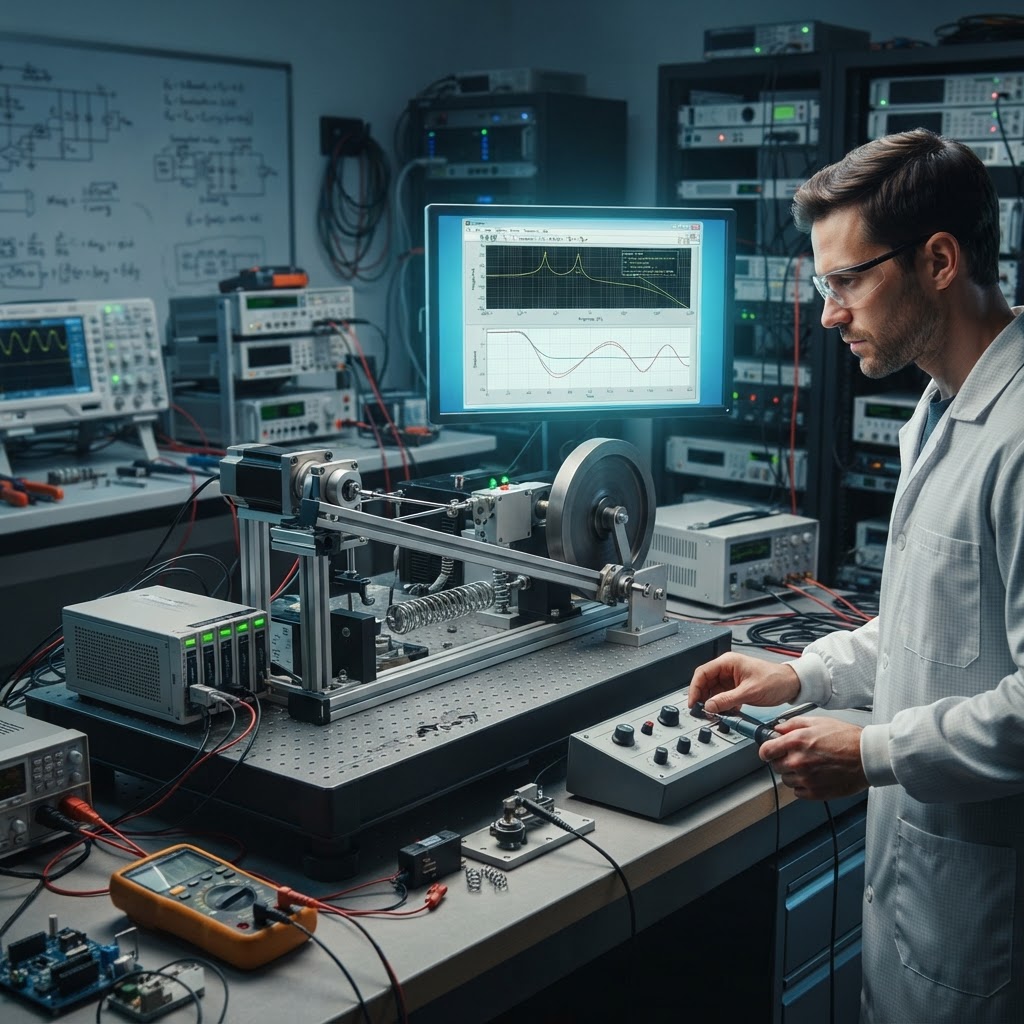
Stability and Oscillation in Systems
Understand why systems oscillate and how to keep them from spinning out of control.
The Problem of Over-Correction
Stability is the ultimate goal of any control system. A stable system returns to its setpoint after a disturbance. An unstable system, however, tends to grow worse over time. Often, this instability manifests as oscillation—a rhythmic swinging back and forth around the target that never settles down.
Why Systems Oscillate
Oscillation usually happens due to 'lag' in the feedback loop. If your thermostat is slow to register that the room is already warm, it will keep the heater on too long. By the time it turns off, the room is too hot. Then it stays off too long, and the room becomes too cold. This 'overshoot' creates a wave-like pattern of temperature fluctuations rather than a steady, comfortable environment.
Achieving Steady State
Engineers use mathematical modeling to predict how a system will react. By adding 'damping'—a form of resistance to change—we can slow down the system's reaction enough to prevent it from overshooting. Achieving a balance between a system that is too slow to react (sluggish) and one that is too fast (unstable) is the hallmark of a well-engineered control system. Always strive for a system that settles into a 'steady state' as quickly and smoothly as possible.
Try this at home
Fill a small bucket with water and hold it by the handle. Try to walk while keeping the water level perfectly flat. As the water sloshes, you will naturally adjust your walking speed or bucket tilt to dampen the motion. If you move your arm too aggressively, the water will slosh even harder (instability). If you move too slowly, you might not catch the slosh in time. This exercise demonstrates damping and oscillation, showing how your body acts as a controller to maintain a steady state of 'flatness' despite your movement.
