 Translate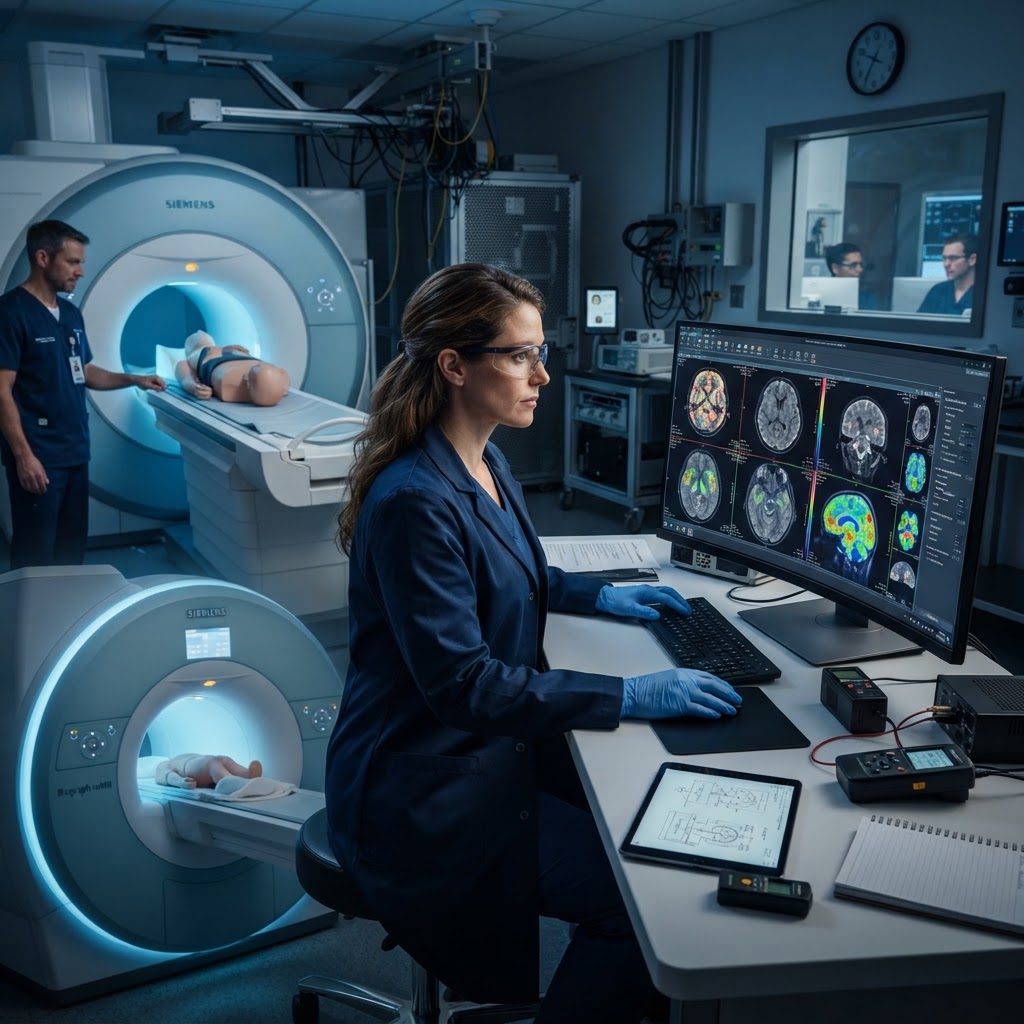
Nuclear Medicine Applications
How nuclear physics helps doctors diagnose and treat complex diseases.
Beyond Electricity
Nuclear engineering is not just about power generation; it is a vital pillar of modern medicine. By producing radioisotopes—atoms that are unstable and emit radiation—we can create tools that allow doctors to 'see' inside the human body without surgery. This field, known as nuclear medicine, uses these isotopes as tracers to map organ function and detect anomalies.
Diagnostic Imaging
One common technique is the PET scan. A patient is given a radiotracer that emits positrons. As these positrons interact with electrons in the body, they release gamma rays. Specialized sensors detect these rays to create a detailed three-dimensional image. This allows clinicians to spot tumors or monitor blood flow in the brain, providing insights that traditional X-rays simply cannot offer.
Precision Therapy
Radiation is also used as a treatment tool. Targeted radionuclide therapy uses isotopes to deliver radiation directly to cancer cells while sparing healthy tissue. By engineering isotopes that bind to specific biological markers on a tumor, we can essentially create a guided missile that destroys cancer from the inside out. This precision is a testament to the sophisticated engineering required to manage atomic particles safely.
Try this at home
Use a smartphone app or a DIY Geiger counter kit (available online) to detect natural background radiation from household items. Test objects like potassium-rich bananas or old luminous watch dials. While these are safe, they demonstrate how materials naturally emit radiation. Record your readings in different locations in your house. This experiment helps you understand that radiation is all around us and provides a baseline for how nuclear engineers measure and detect radioactive decay using sensor technology in medical and industrial settings.
