 Translate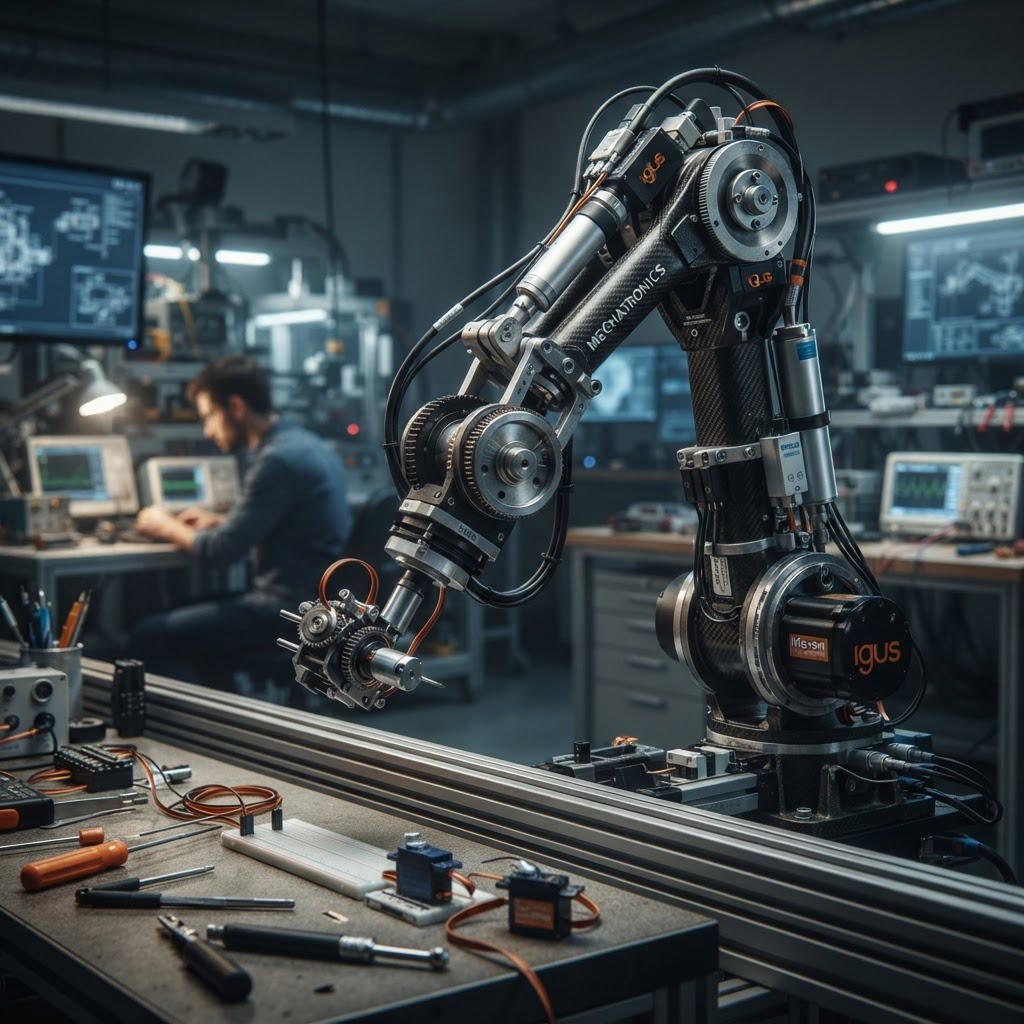
How Motors Move the World
The science behind the muscles of machines.
Every robot needs a way to move, and that is where actuators—specifically electric motors—come in. A motor works using electromagnetism. Inside the motor, there are coils of wire and magnets. When you send electricity through the coils, it creates a magnetic field that pushes against the permanent magnets, forcing the center part to spin. But a simple spin isn't always useful. We need precision. That is why mechatronics engineers use stepper motors or servo motors. A servo motor has a built-in sensor that tells the controller exactly what position it is in. If the controller tells the arm to move to 45 degrees, the motor calculates how much it needs to rotate and then 'locks' into that position. This level of control is what allows robotic arms to assemble cars or perform delicate surgeries. By combining high-speed electronics with precise mechanical gears, engineers can create machines that move with more accuracy and strength than any human ever could.
Try this at home
Take a small toy car with a motor and look at how the wheels are connected. Try to see if there are any gears between the motor and the wheel—this is a 'gear train' used to trade speed for power!
