What is Six Sigma?
The engineering secrets behind perfect products.
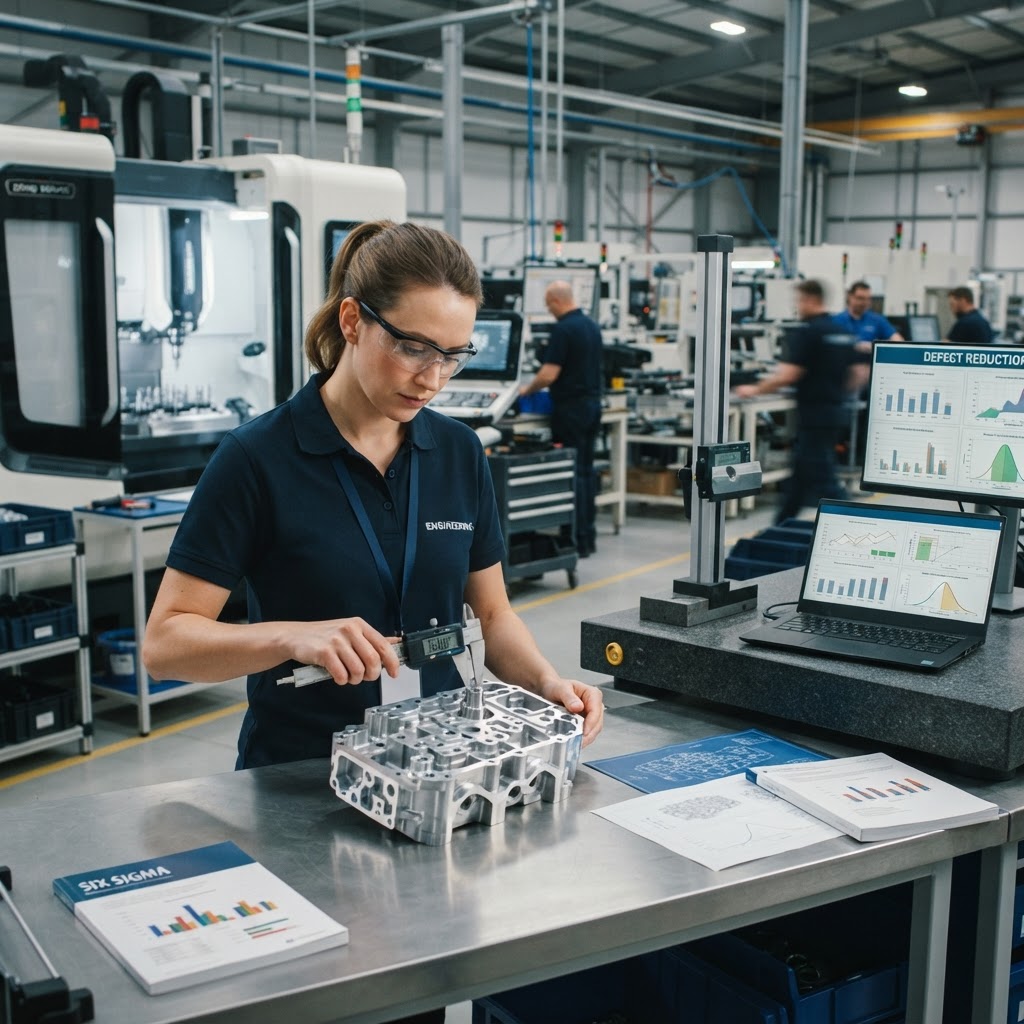
In manufacturing, 'close enough' is often not good enough. If you are making parts for an airplane engine, even a tiny error could be disastrous. Six Sigma is a set of techniques used to improve quality by identifying and removing the causes of defects. It is all about variation. Every machine has tiny differences—maybe one tool is slightly duller, or the temperature in the factory fluctuated for a minute. These variations lead to inconsistent products. Engineers use statistical tools to measure exactly how often these variations occur. The goal of Six Sigma is to reach a level of quality where only 3.4 defects occur per one million opportunities. That means your process is so stable that it is virtually perfect. Engineers accomplish this by constantly measuring, analyzing, and improving the process. It is the ultimate form of 'measure twice, cut once,' scaled up to a massive industrial level to ensure that everything from your soda bottle to your laptop keyboard works exactly as intended.
Try this at home
Draw 50 circles on a piece of paper as fast as you can. Then, measure how many look 'perfect' versus 'messy.' Try to find a way to make them all look identical, like using a stencil, and measure your improvement.