 Translate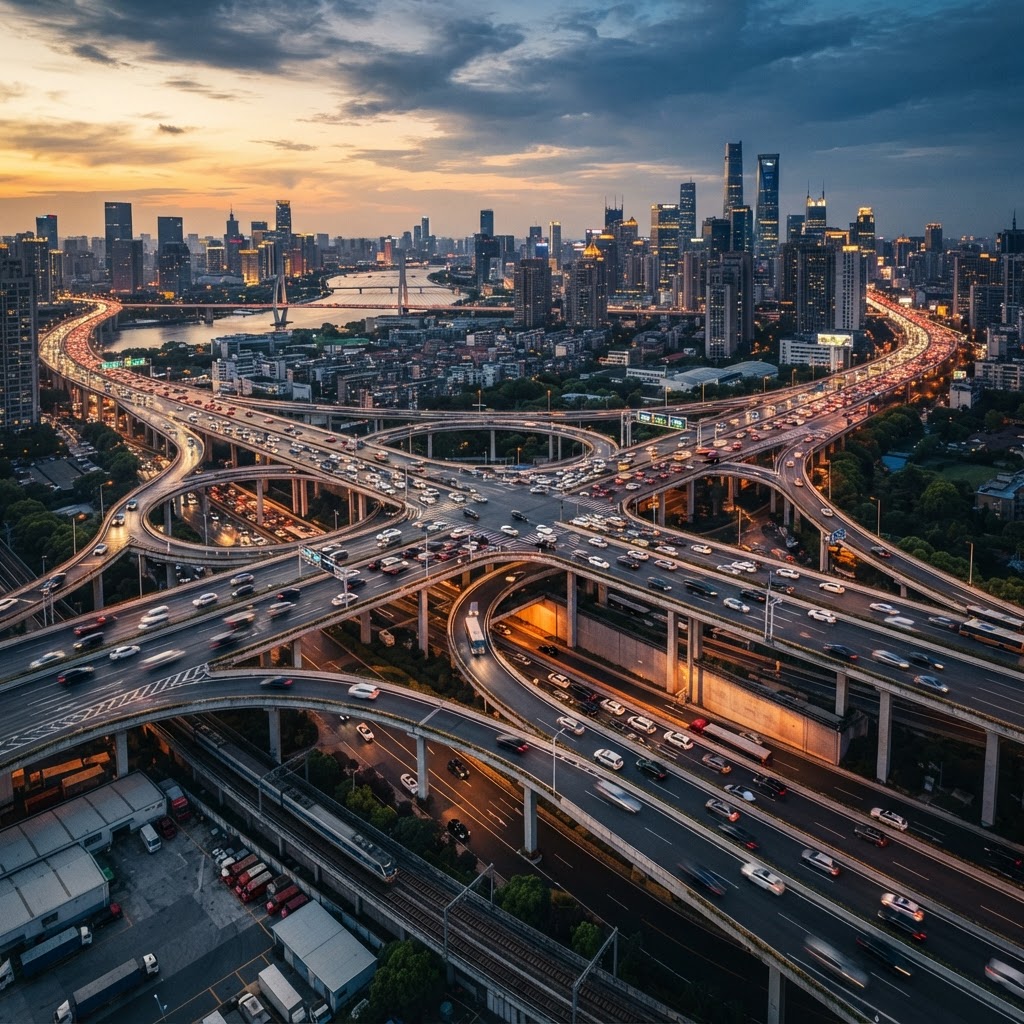
Traffic Flow: Beating the Gridlock
Why traffic jams happen and how engineers use math to clear them.
Traffic isn't just a collection of angry drivers; it is a fluid system. Just like water flows through pipes, cars flow through roads. When the number of cars exceeds the capacity of the road, you get a 'bottleneck.' Logistics engineers study this using queueing theory. They look at how long cars wait at lights, the speed of merging, and how one person hitting their brakes can cause a 'shockwave' of stopping that ripples backward for miles. To fix this, engineers use intelligent transport systems. They synchronize traffic lights so that if you drive at a certain speed, you hit mostly green lights. They also design 'on-ramp metering'—those extra traffic lights at highway entrances—which release cars one by one so the highway isn't overwhelmed all at once. By treating the road like a giant circuit, engineers can increase the 'throughput' of vehicles, keeping the city moving smoothly and reducing the time you spend staring at the bumper in front of you.
Try this at home
Fill a funnel with marbles and see how they get stuck at the neck. Then, try shaking the funnel gently to see how a steady 'flow' is much faster than dumping them all at once.
