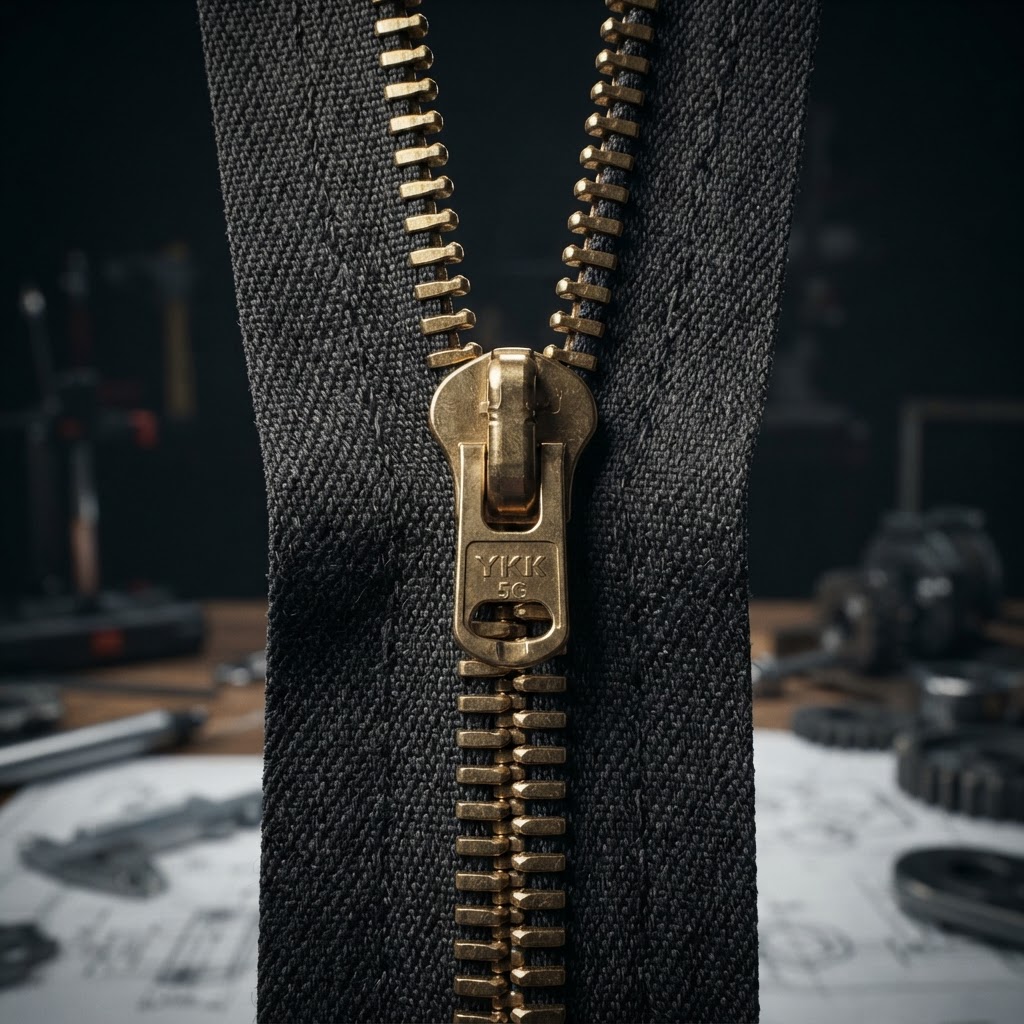
How a Zipper Works
Two rows of teeth that lock — and a slider that does the magic.
A zipper looks simple, but it's a clever little machine. It has three parts: two rows of teeth (one on each side of the opening) and a slider — the little metal tab you pull.
Each tooth has a shape like a hook or a wedge. The teeth on the left side and the right side are mirror images. On their own, the two rows just sit there — they don't connect.
The slider is the genius. Inside it is a Y-shaped channel. As you pull the slider up, it forces the two rows of teeth together at an angle, and each left tooth snaps into the matching right tooth, interlocking them. Once locked, the teeth can't pull apart sideways — only the slider can unlock them by bending them back out.
Pull the slider down, and the Y-channel does the reverse: it wedges the teeth apart, row by row, freeing the two sides.
Why is this engineering, not just a fastener? Because it solves a real problem: how to join two flexible edges securely but open them again instantly. The teeth hold against pulling along the seam, but the slider can defeat them by pulling perpendicular — using geometry, not force.
Tiny, mass-produced, and almost invisible — zippers are one of the most successful mechanisms in everyday life.
Try this at home
Watch a zipper think. Take a jacket with a zipper and slowly pull the slider up while watching the bottom of it. You'll see the two rows enter the slider separate and come out the top interlocked. Pull it down and watch them separate. That Y-shape inside is doing all the work.
Try this: can you force the zipper open by pulling the two sides apart without using the slider? (Don't break your jacket!) You'll find it's nearly impossible — that's the geometry holding, not glue.