 Translate
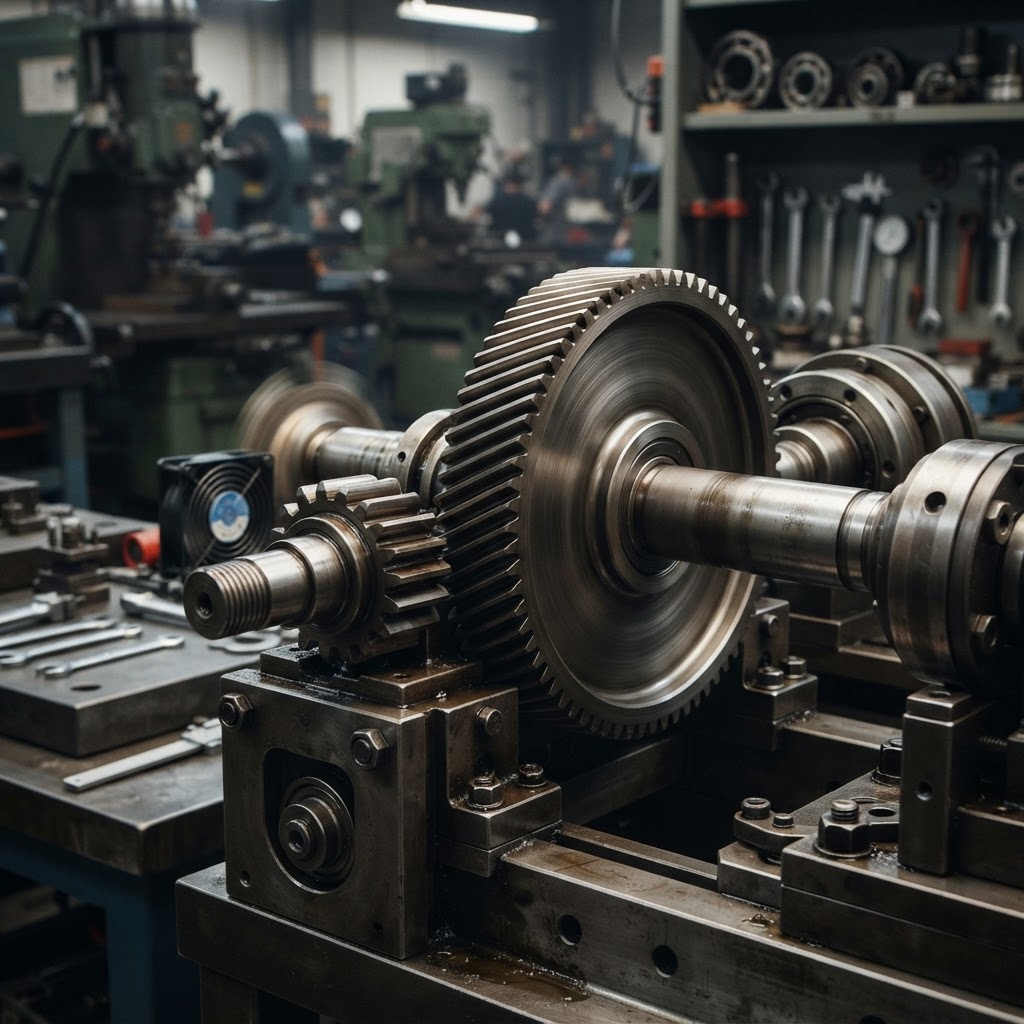
Gears: Trading Speed for Force
How spinning circles give you muscle — or speed.
Gears are wheels with teeth that mesh together. When one gear turns, it forces the next one to turn too. But here's the clever bit: gears let you trade speed for force (or force for speed).
Imagine a big gear with 40 teeth driving a small gear with 10 teeth. Turn the big gear once — it pushes all 40 teeth past. The small gear has to turn four times to keep up. So the small gear spins 4× faster, but with only ¼ the force.
Flip it around: turn the small gear, and the big gear turns slowly but with 4× the force. That's the whole game.
This is why a bicycle is hard to pedal in high gear on a hill (small → big, lots of force needed at the wheel, but you get speed) and easy in low gear. It's why a hand-crank winch can lift a car: a tiny handle spins fast, turning a big gear slowly with huge force. And it's why an electric motor spinning fast can be geared down to move something heavy.
Engineers call this mechanical advantage. Gears don't create energy — energy is conserved. They just let you spend it however you want: lots of speed and little force, or lots of force and little speed.
Look around and you'll find gears everywhere: bicycles, clocks, cars, drills, can openers. Each one is a tiny negotiation between speed and muscle.
Try this at home
Find a gear. A bicycle is the easiest. Lift a bike so the back wheel spins freely. Shift to the smallest gear in the front and biggest in the back. Pedal one full turn — count how many times the wheel spins. Now shift to the opposite. Feel the difference: one is easy but slow, the other is hard but fast.
No bike? Look at a hand can opener or a pencil sharpener. The handle is a big gear; the blade is a small one. You trade your slow, strong twist for fast cutting.
